About
From matter to judgment
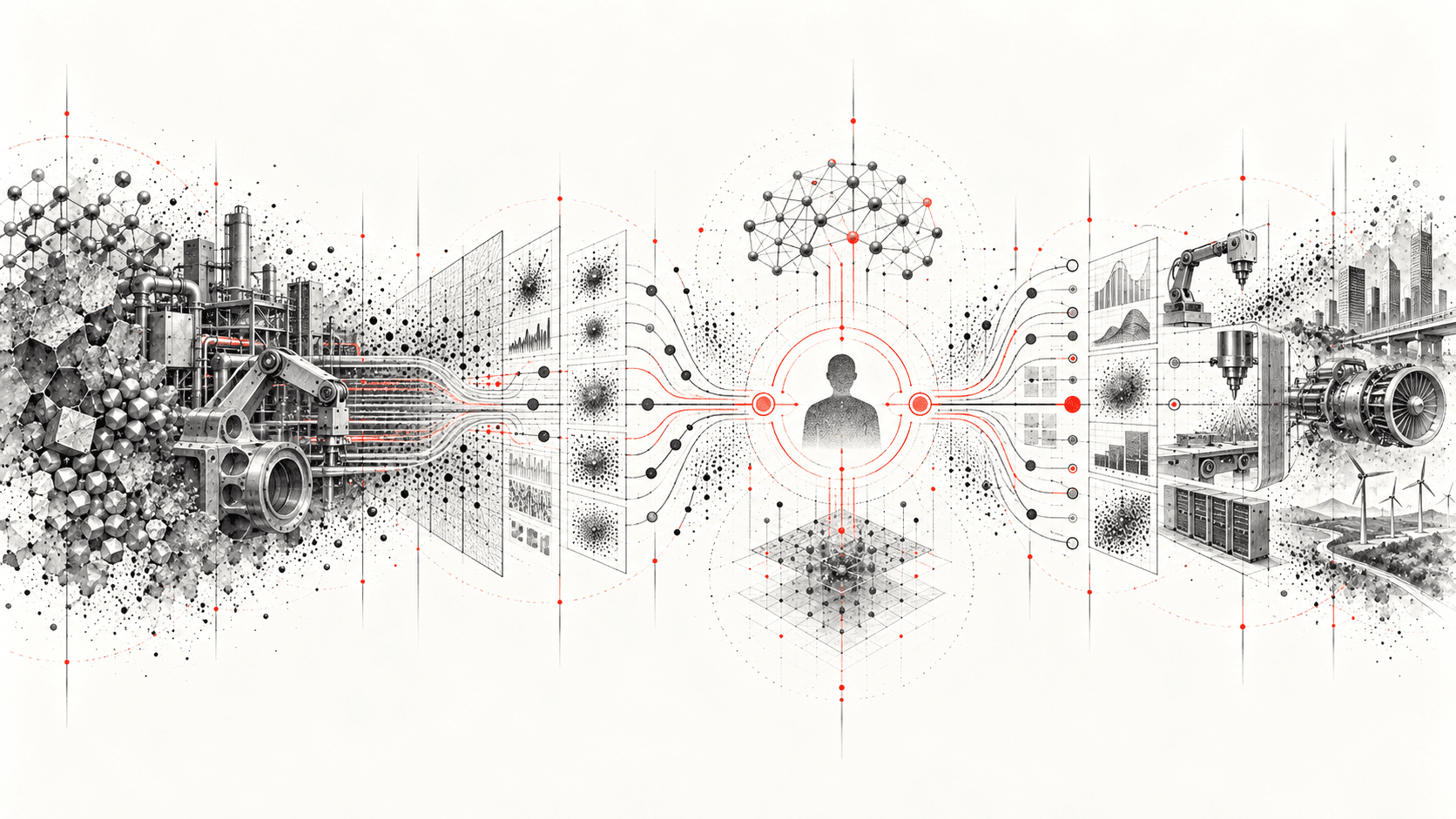
I started by trying to understand matter.Then I learned how to engineer it.Then how to use it to manufacture products with it.Then how to use machines to improve the product made by the matter.Now I am interested in where human judgment belongs.
The scale keeps increasing
- Atoms
- to Materials
- to Components
- to Manufacturing systems
- to Data
- to AI
- to People

Why this exists
A 15-year question
I recently became a father. I cannot say with any confidence what work will look like when my daughter is an adult, and the pace of AI is the reason.
So this site is also a long investigation, one I expect to run for the years it takes her to grow up: how jobs change, which capabilities stay valuable, where AI belongs, and where human judgment continues to matter.
01Physics
Understanding matter
Physics is where the questions started: what matter is, how it behaves, and how to see it.
My education began with physics, and within it the physics of solids and materials: how atoms arrange themselves, why a structure behaves the way it does, and what can be learned by looking closely enough.
Microscopy made the small visible. It was the first time I saw the order underneath a material, and it is the scale every later chapter is built on.
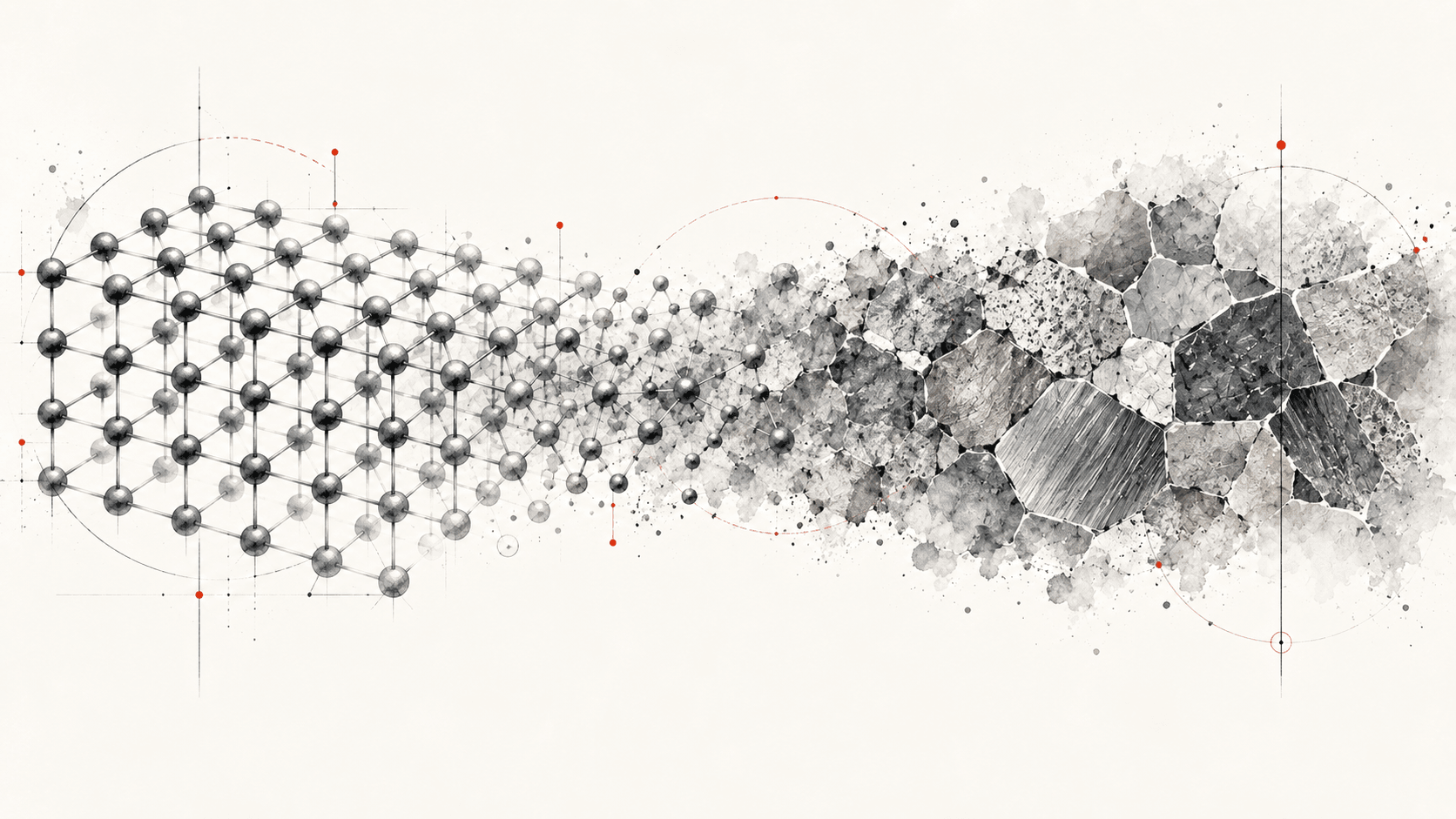
- Random particles
- to Crystalline lattice
- to Material
02Materials
Engineering matter
Once a material is understood, the next question is how to make it do something.
Graduate study in materials science and engineering moved the question from what a material is to what it can be made to do. The thesis work simulated composite materials in Abaqus and used machine learning to learn from those simulations.
That was the first meeting of three threads that run through the rest of this story: materials, simulation, and models that learn from data.
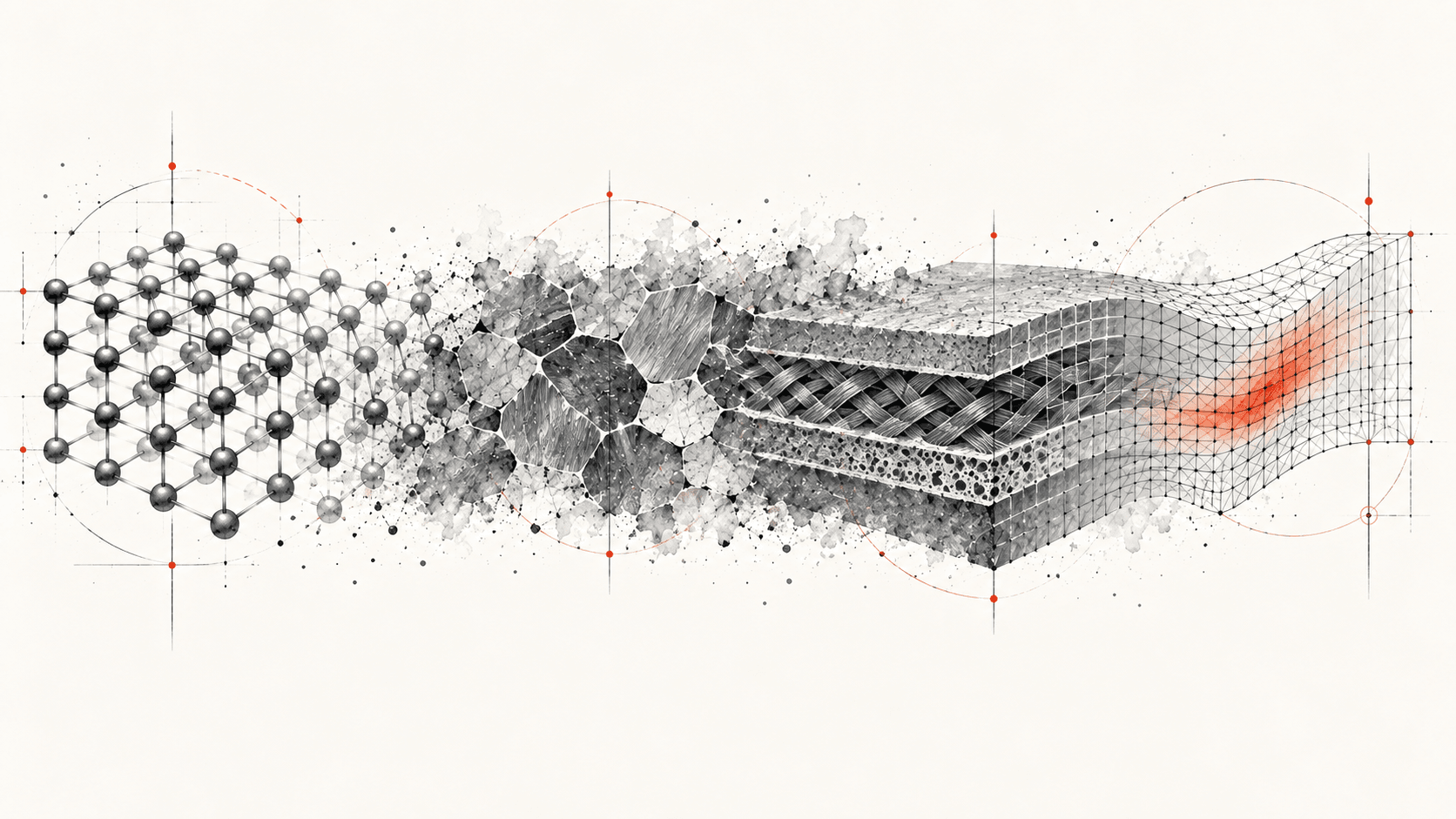
- Crystal lattice
- to Metallic grains
- to Composite layers
- to FEM mesh
- Materials
- to Simulation
- to Machine learning
03Manufacturing
From material to component
Understanding a material is not the same as producing a part from it, reliably, again and again.
The scale changed from microns to millimetres to whole components, and the work changed with it: extrusion and injection moulding, laboratory testing of what came out, and building up the materials and process data that let one run be compared with the next.
A material's performance stopped being a property and became something the process had to earn.
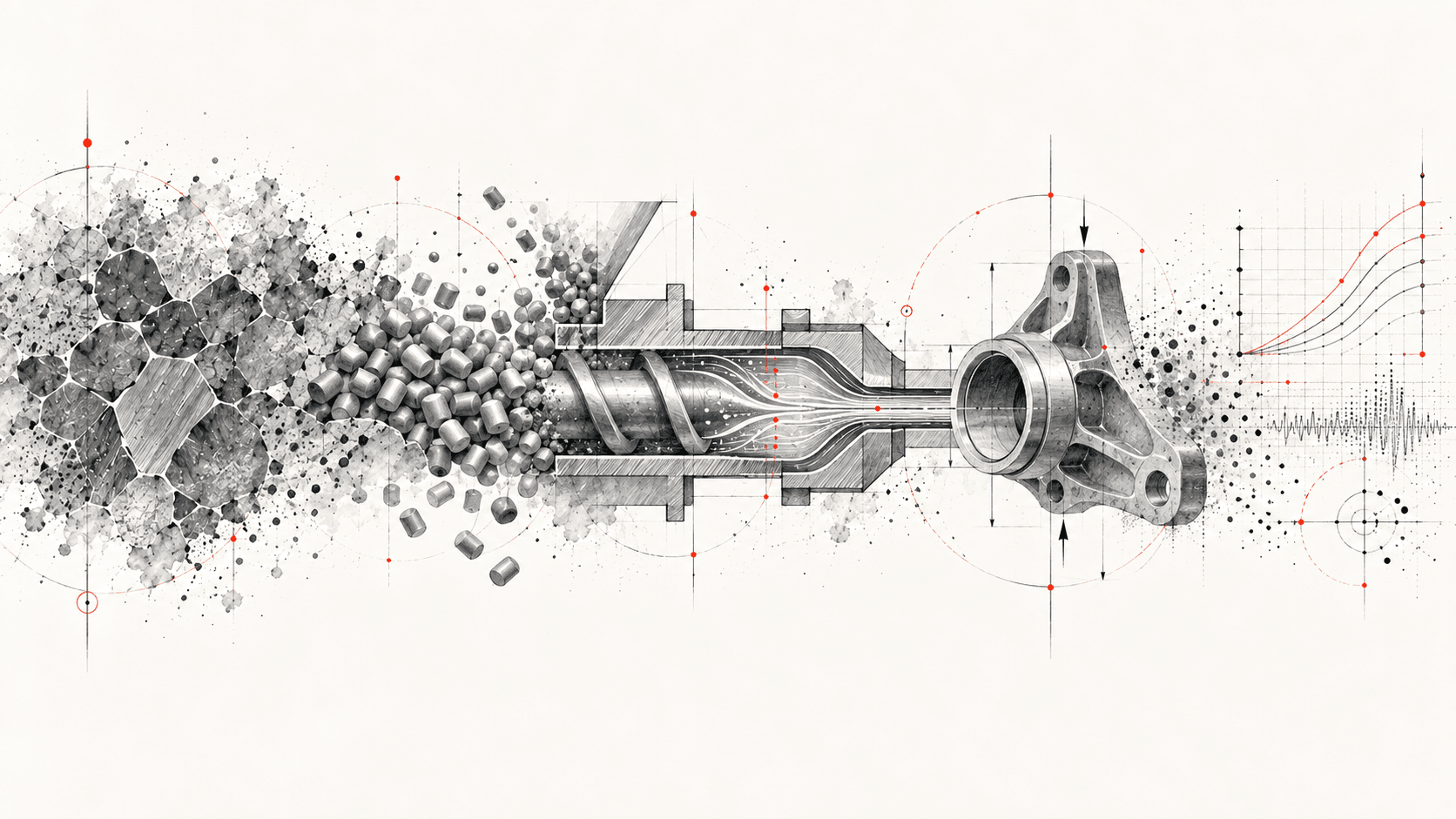
- Microns
- to Millimetres
- to Component
- to Manufacturing line
- Material
- to Process
- to Testing and performance
- to Database
04Process
Shaping process
When the product is fixed, the process is the design.
Process engineering meant owning the recipe: the parameters that turn material into product. Simulating the process in Abaqus made a digital twin of it, so a change could be tested in the model before it cost a run on the line.
The judgment was in deciding which parameters mattered, and which of the model's answers to believe.
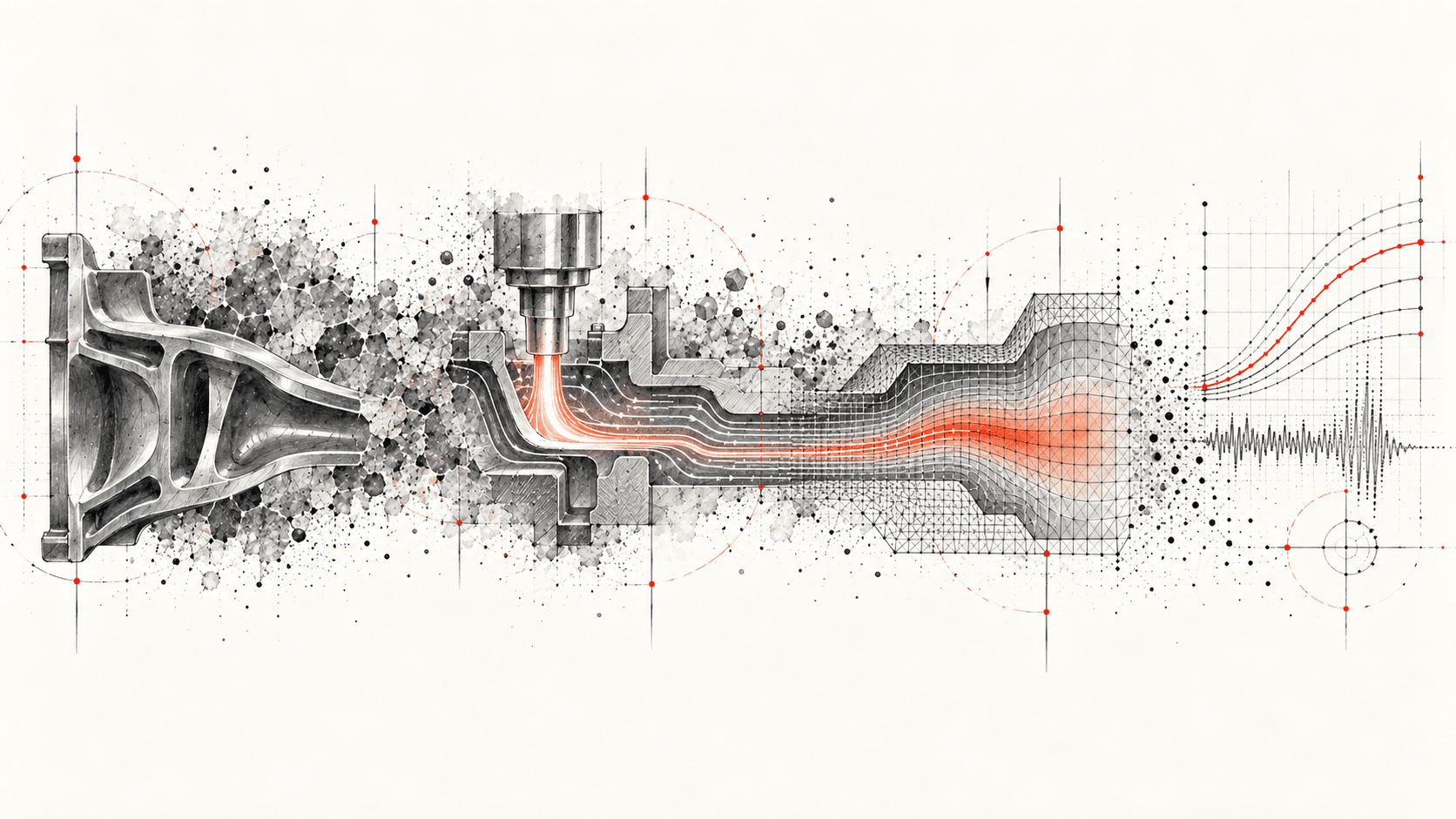
- Component
- to Process
- to Flow and heat
- to Simulation
- to Measured behaviour
05Advanced manufacturing
Scaling manufacturing
Past a certain point the product depends less on the material than on everything around it.
Advanced manufacturing is where engineering became systems work. The material was still there, but so were the machines, the software running them, the data they produced and the people who had to act on it.
None of those could be improved alone, and most of the real problems lived in the joints between them.
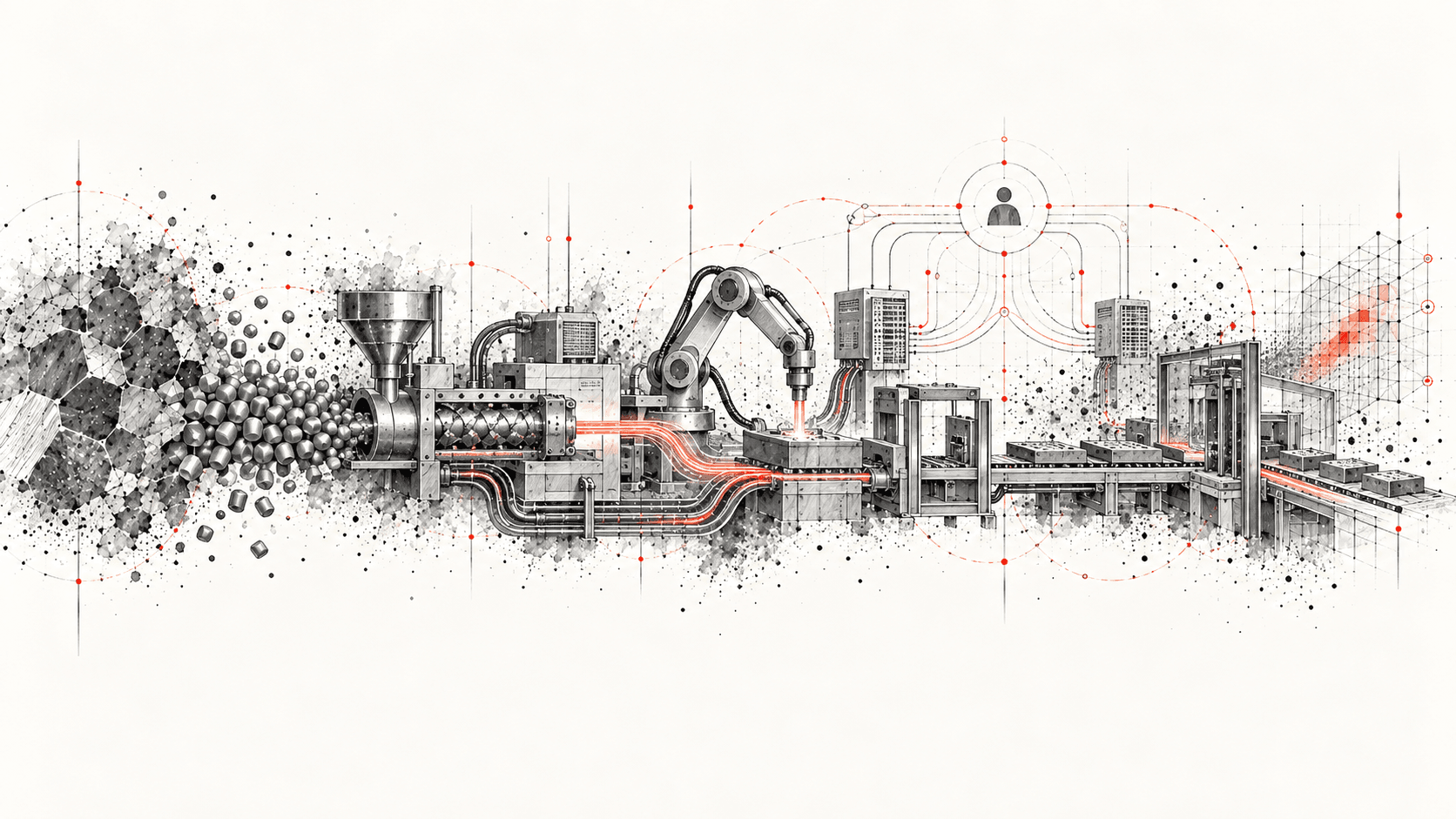
- Material
- plus Feedstock
- plus Equipment
- plus Robotics
- plus Production line
- plus Operations
06AI and data
From data to judgment
With enough data, a machine can start to see, learn and suggest.
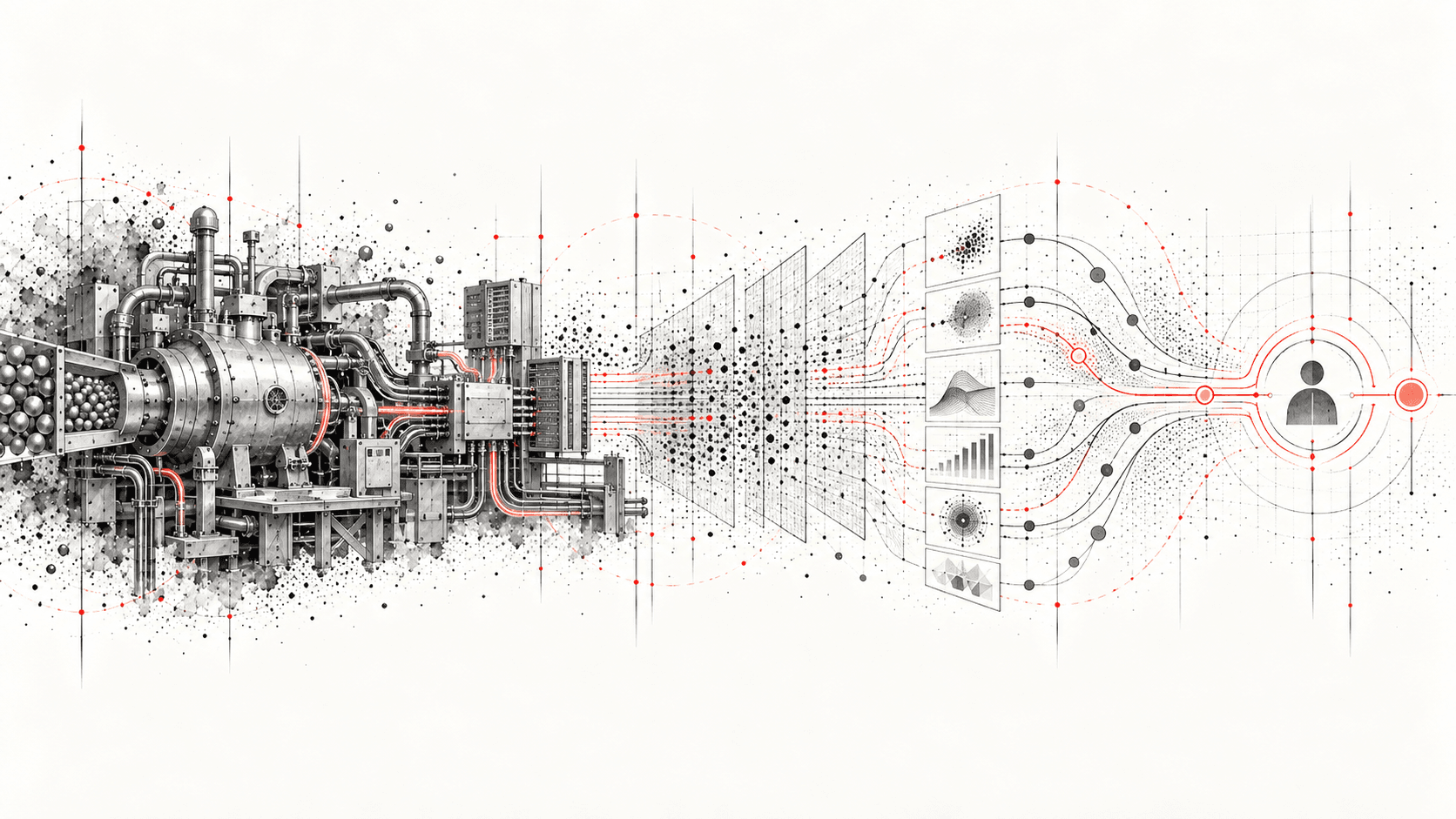
This is the chapter still being written: camera-based computer vision, machine learning and data science on industrial problems, digital twins that learn from production, and more recently AI agents and agentic coding, including agent workflows for image analysis and root-cause analysis.
Alongside the building, teaching: designing and running AI training and workshops so colleagues can use AI practically and recognise the projects worth doing. The lesson so far is that capability is the easy part.
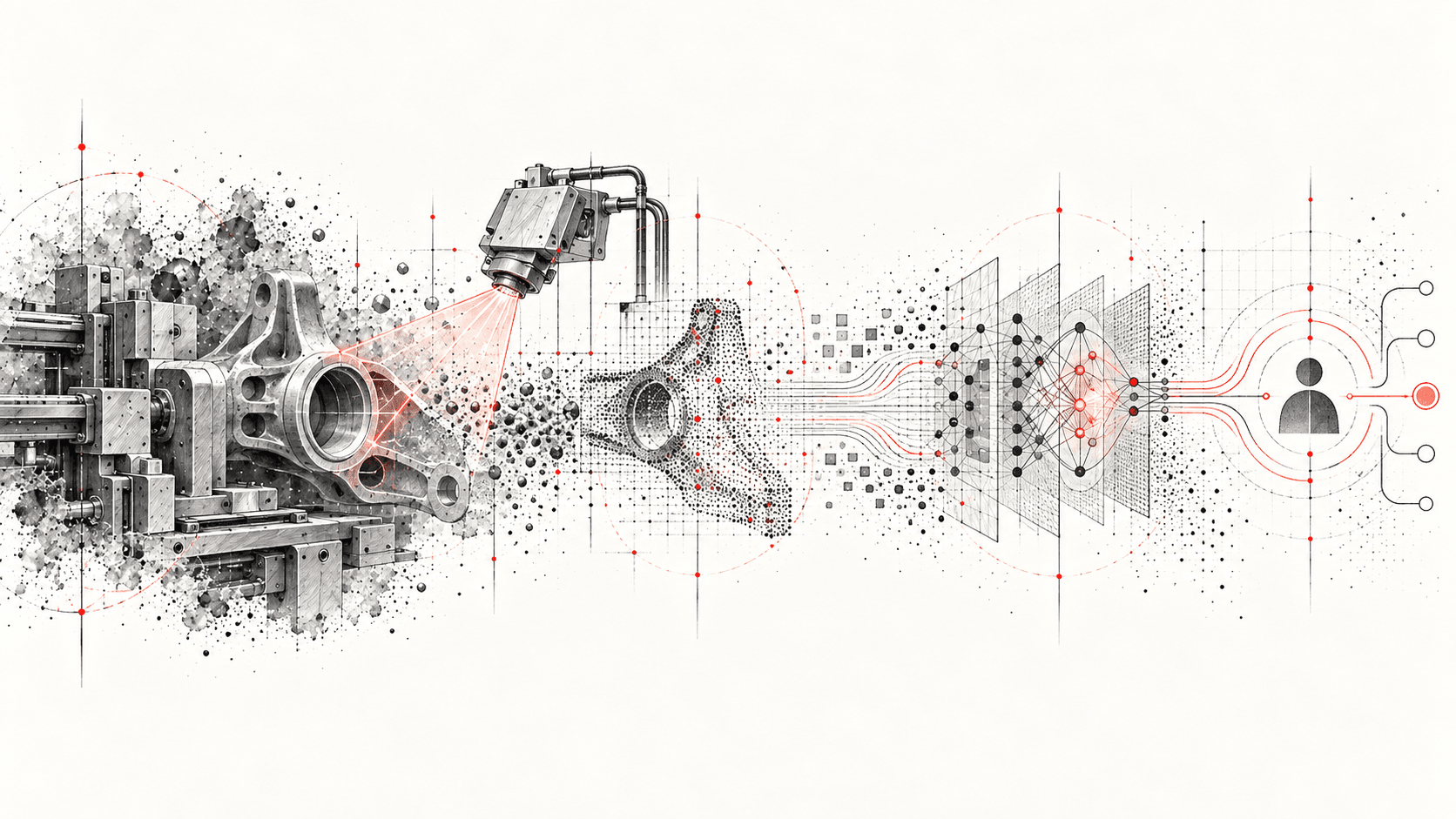
- Component
- to Sensing
- to Data
- to Model
- to Human judgment
07Leadership
Capability still needs judgment
Leading work, rather than only doing it, showed where capability stops.
Leading work meant being accountable for decisions no model could take, and for the people who had to live with them. Capability was never the constraint. Deciding what to do with it was.
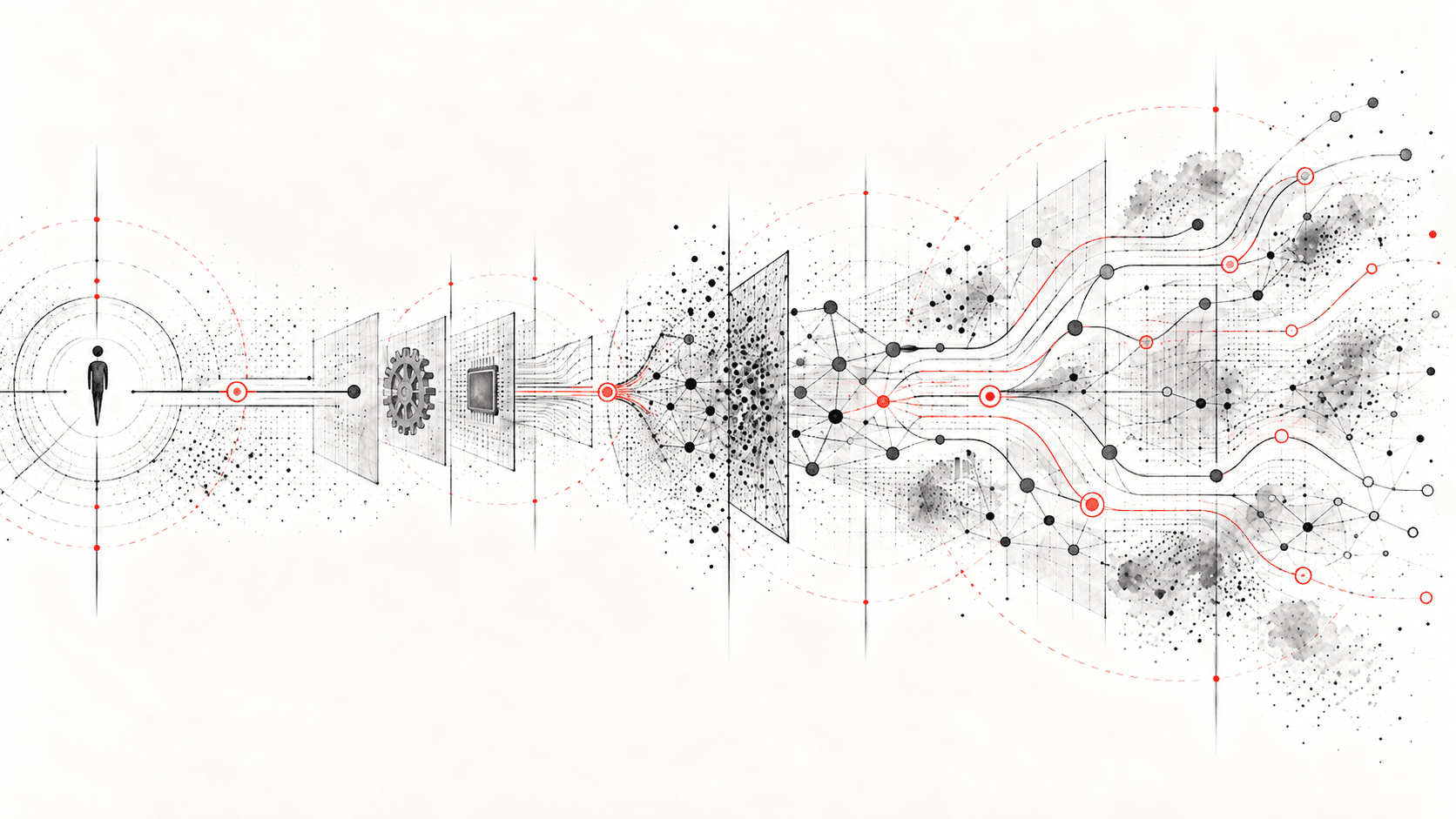
- Capability
- times Judgment
08The question changed
The question became intergenerational
Becoming a father turned a professional question into a generational one.
I used to ask what technology could do for the work in front of me. Now the question is how to guide people, including the next generation, toward meaningful careers when the work itself is being rewritten.
Nobody can answer that with a prediction. It can only be answered by watching carefully, profession by profession, and being honest about what is known.
- One career
- to The next generation
09Human AI Judgment
Where human judgment belongs
This site is the investigation, run in public.
Every profession here is worked the same way, in the same order: understand the work, break it into tasks and decisions, apply human judgment, decide where AI helps, and only then choose tools.
The reasoning is published with the answer so it can be checked, and disagreed with. The result appears as Job vs AI analyses, playbooks, the things being built, and the insights along the way.
- Profession or problem
- to Understand the work
- to Identify tasks and decisions
- to Apply human judgment
- to Decide where AI helps
- to Then choose tools
Follow
Follow the work
I publish the same investigation in different forms across platforms — professional discussion, short-form career analyses, research notes and community conversations.
- LinkedIn (opens in a new tab)
Professional AI, work and career analysis.
- TikTok (opens in a new tab)
Short-form Job vs AI videos and profession questions.
- Instagram (opens in a new tab)
Visual Job vs AI explainers and short-form video.
- Reddit (opens in a new tab)
Open discussion, questions and challenges to the analysis.
- X (opens in a new tab)
Short observations on AI, judgment and work.
- Threads (opens in a new tab)
Conversational updates and ideas.
- Facebook (opens in a new tab)
Broader project updates and educational content.