Human judgment × AI augmentation
Use AI with judgment.
Question first. Examine carefully. Then decide what AI should do. Profession by profession, task by task.

01The method
Tools are the last decision, not the first.
Start with the work, not the tool
Most AI adoption fails at step one: buying capability and then looking for somewhere to put it. The order below is what makes an answer defensible when someone asks why a step is automated.
- Profession
- The work
- Tasks
- Judgment
- Where AI helps
- Tools
Human
- ContextWhat the situation actually is
- EthicsWhat should not be done
- CreativityThe option nobody listed
- JudgmentThe call someone has to own
AI
- SpeedFirst drafts in seconds
- ScaleBreadth a person cannot cover
- MemoryRecall without fatigue
- AutomationThe same step, every time
Humans decide. AI assists.
02The framework
Four lanes. Every task belongs in one of them.
Automate, augment, human, verify
This is the language used on every profession page. The lane is a decision about accountability, not a score.
Automate
Repetitive, low-risk tasks
Is this rule-shaped, repeated often, and cheap to check when it goes wrong?
Augment
Analysis, drafting, research
Would a fast first draft or a wider search make the human better at this?
Human
Judgment, context, empathy
Does this need accountability, lived context, or a call someone must own?
Verify
Facts, risk, accountability
What has to be checked before this leaves the building?
03The adoption gap
Most people have not started. That is the opportunity.
AI is everywhere in the conversation. Not yet in everyone's workflow.
17.8%
In Q1 2026, an estimated 17.8% of the world's working-age population had used a generative AI product. Which means roughly four in five had not.
The gap is not a shortage of tools. It is a shortage of clear ways to work out where AI actually helps. The goal here is not to push more tools at more people. It is to help more people understand where AI genuinely helps their work, and how to plan, orchestrate and verify its use.
Global AI diffusionQ1 2026
Share of working-age adults (15–64) who used a generative AI product during the reported period
17.8% global working-age adoption

How to read this: each dot represents an entire country or economy, not a city. Dot size and colour indicate the estimated share of the working-age population using generative AI. Hover, tap or choose an economy to see its figure.
Data: Microsoft AI Economy Institute, Global AI Diffusion — Q1 2026 Trends and Insights; 147 economies, measured March 2026, from the institute's published dataset. This map is our own visualisation of that data, not an official Microsoft graphic.
04Job vs AI
The growth engine of this site.
Job vs AI
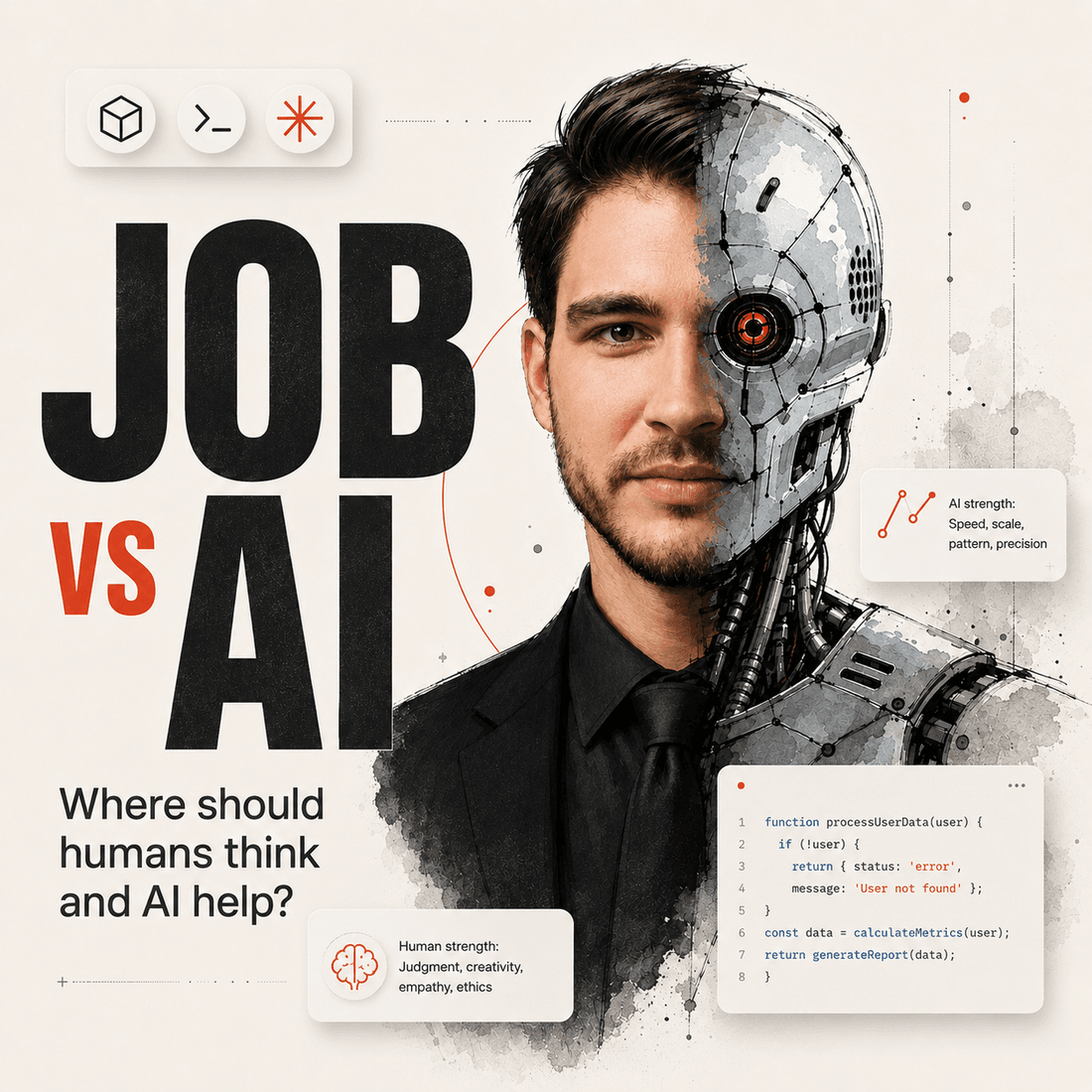
Where should humans think, and AI help?
One profession at a time, broken down to the level of individual tasks. No predictions about which jobs disappear, and no tool lists dressed up as advice.
- What the profession actually does, before anything about AI.
- Which tasks are safe to automate, and which only look that way.
- Where AI genuinely makes the work better.
- What must stay human, and what has to be checked before it ships.
05Professions
Published analyses
Each page follows the same structure, so two professions can be compared without re-learning the layout.
Engineering
Mechanical engineer
Design, analysis and validation work where a wrong answer ends up in a physical object. The artefacts are getting cheaper to produce; deciding whether they are right is not.
Sales
Account Manager
The only profession in this series where a completely correct output can still be the thing that costs you the account.
Delivery
Project Manager
The profession whose actual deliverable is information other people act on - which makes it the one where faster reporting can quietly make the job worse.
06Build
Capability, not a portfolio.
What I build around
Applied AI systems, and the capabilities required to make them useful and reliable.
01
Product & app development
From product logic to an application people can actually use.
02
AI agents & agentic systems
Agents that reason, use tools and stay inside defined boundaries.
03
Machine learning & data
Data into models, and models into evidence for a decision.
04
Computer vision & industrial AI
Image data into measurable information and production decisions.
05
AI enablement
Teams taken from understanding AI to building with it.
07Insights
Notes on judgment and work
Shorter pieces on problem solving, verification and the practical side of using AI at work.
Verification
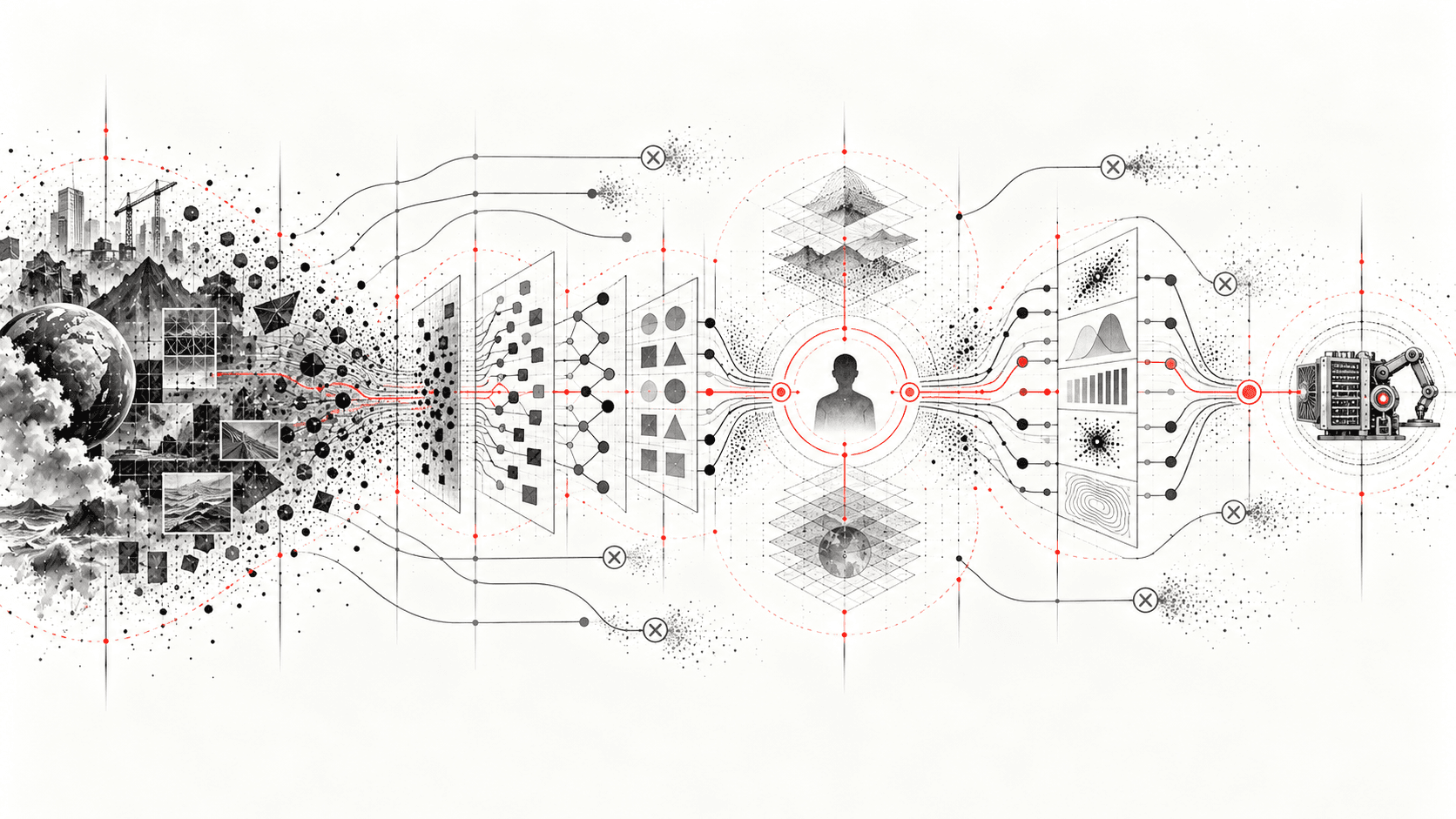
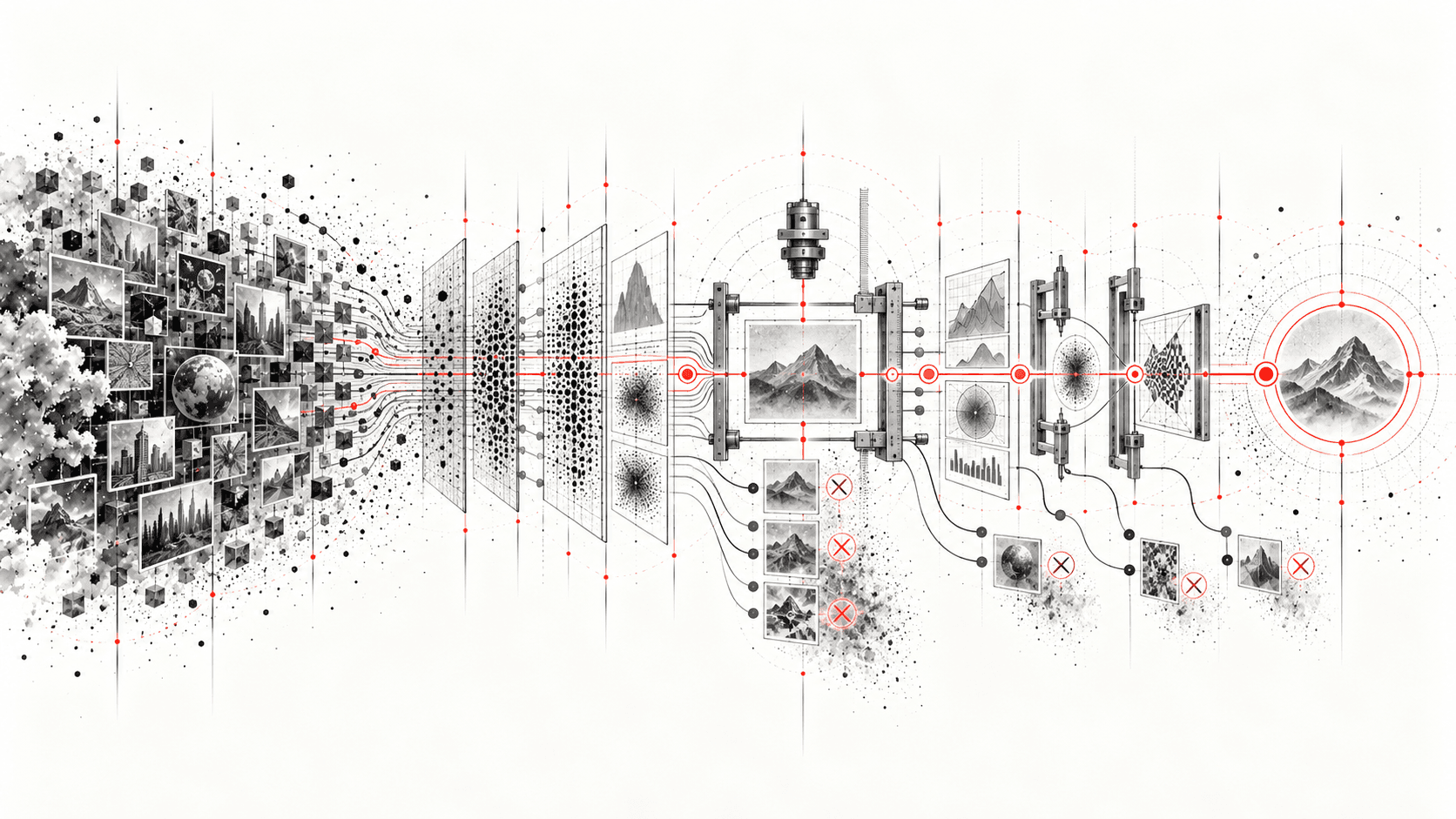
Verification is the job now
When generating an answer becomes cheap, knowing what to check becomes the scarce capability.
Building in public
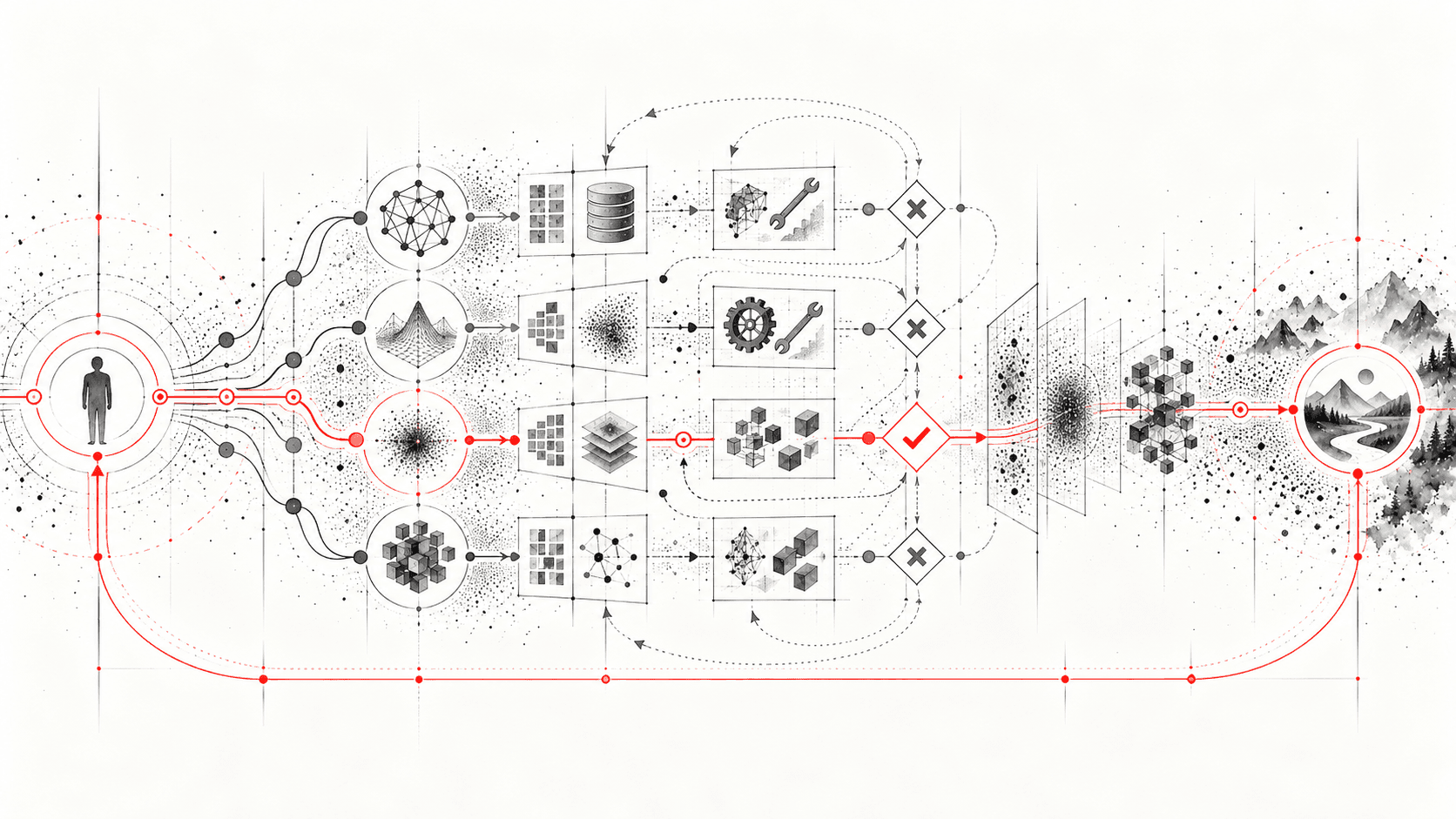
What building this site taught me about AI agents
The useful part of agentic work is not autonomy. It is designing the boundaries, checks and feedback loops around it.
08Playbooks
One per profession. Free.
The Practical AI Judgment Playbooks
Profession-specific guides that take a task analysis further than a web page can. Each one is written for the people actually doing the work.
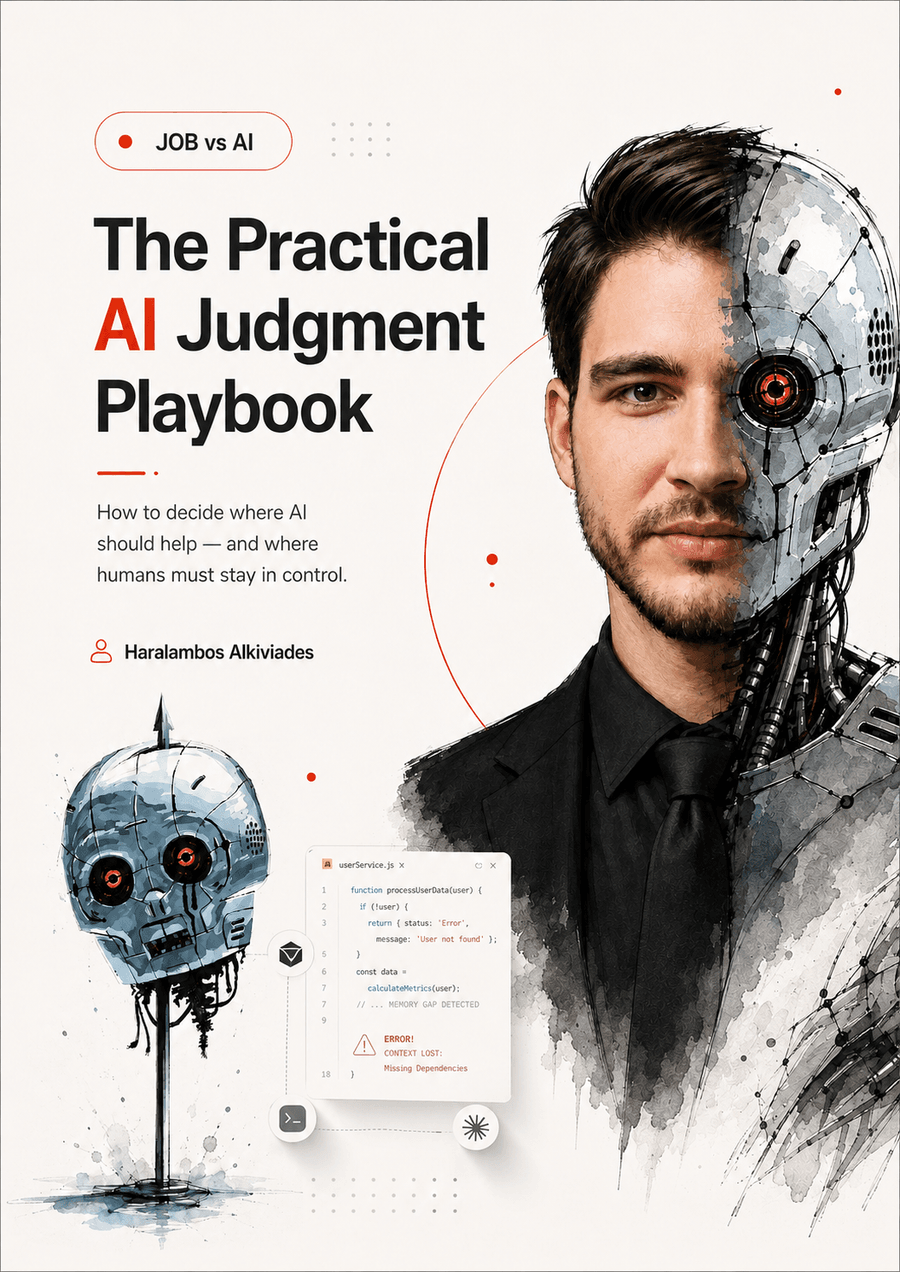
- Task analysis: the work broken down to individual decisions.
- Where AI genuinely helps, and where it only appears to.
- What stays human, and who is accountable for it.
- Workflows, verification steps and the risks specific to the profession.
Pick your profession first. The playbook you get is the one written for that work, not a general guide with your job title pasted on top.
09About
About
I am learning this in the open: building the systems, testing where AI actually helps, and publishing what does not work as well as what does.
Haralambos Alkiviades
Read the background10What next
Two ways to carry on
Explore Job vs AI
Choose a profession and see which tasks should be automated, augmented, kept human or verified.
Decide where AI fits in your work
If you have a real problem, workflow or team challenge, tell me what you are working on.
Follow the investigation
New professions, experiments and ideas as they are published.